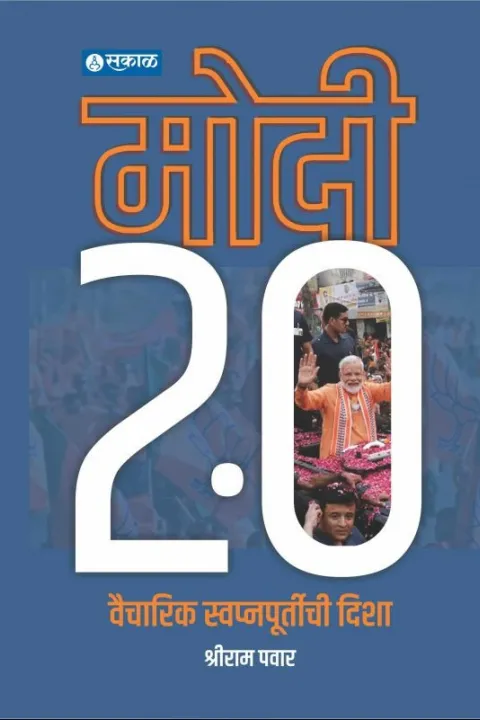
Modi 2.0 Vaicharik Swapnapoortichi Disha
श्रीराम पवार लिखित या पुस्तकात सत्तेत आलेल्या ‘एनडीए’ अर्थात भाजपचे वर्चस्व कसे भारतात आले हे त्यांनी संदर्भासहित मांडले असून, मोदी आणि त्यांचे निकटचे सहकारी अमित शाह यांनी स्वतःचे कौशल्य पणाला लावून २०१४ आणि २०१९ च्या निवडणुका कशा जिंकल्या याची माहितीपूर्ण गोष्ट सांगितली आहे. सत्तेत येण्यासाठी देशभरात कसे वातावरण तयार केले गेले, कुठल्या कल्याणकारी योजना थेट जनतेत मांडण्यात आला याचा संपूर्ण वेध ‘मोदी २.० वैचारिक स्वप्नपूर्तीची दिशा या पुस्तकात श्रीराम पवार यांनी उदाहरणासह मांडला आहे. राजकारणाचे पारंपरिक आधार मोदींनी कसे बदलले, त्यातून त्यांनी सत्ता कशी मिळवली आणि ती पुढच्या निवडणुकीतही कशी टिकवली याचा स्वतंत्रपणे वेध या पुस्तकातून घेतला आहे. भाजप सरकार सत्तेत आल्यावर त्यांनी कोणते राजकीय आणि सामाजिक निर्णय घेतले आणि त्याचा फायदा त्यांना कसं झाला याचेही विवेचन पुस्तकात केले आहे.
एक दीर्घकालीन वैचारिक अजेंडा प्रत्यक्षात आणण्यासाठी केलेली व्यूहरचना आणि त्या विरोधातील भूमिका अधिक तीव्र होण्याच्या काळातील लढाई हे पुस्तक मांडत मांडत आहे. या पुस्तकातील मूळ लेख सकाळच्या ‘सप्तरंग’ या पुरवणीत ‘करंट अंडरकरंट’ या सदरात प्रकाशित झालेले आहेत.
Sri Ram Pawar’s book explains, with references and supporting context, how the dominance of the NDA (National Democratic Alliance), led by the BJP, emerged in India. It presents an informative account of how Narendra Modi and his close associate Amit Shah leveraged their political skills to secure victories in the 2014 and 2019 general elections.
The book provides a comprehensive analysis of how a favorable political environment was created across the country to bring the BJP to power and how various welfare schemes were directly communicated to the people. In “Modi 2.0: The Direction of Ideological Fulfilment,” Sri Ram Pawar illustrates these developments with relevant examples and detailed explanations.
The book independently examines how Modi transformed the traditional foundations of Indian politics, how he gained power through these changes, and how he successfully retained that power in the subsequent election. It also discusses the major political and social decisions taken by the BJP government after coming to power and analyzes how these decisions benefited the party politically.
Furthermore, the book explores the strategic planning involved in implementing a long-term ideological agenda and the political battles that unfolded as opposition to that agenda grew stronger. The original articles included in this book were first published under the column “Current Undercurrent” in “Saptarang,” the Sunday supplement of the Marathi daily Sakal.